Raw wok body
Start with carbon steel or iron wok bodies before surface treatment.
Surface Treatment
Understand nitriding as a surface treatment route for carbon steel and iron wok cookware. The goal is clear buyer language: useful expectations, careful claims, and practical care instructions.
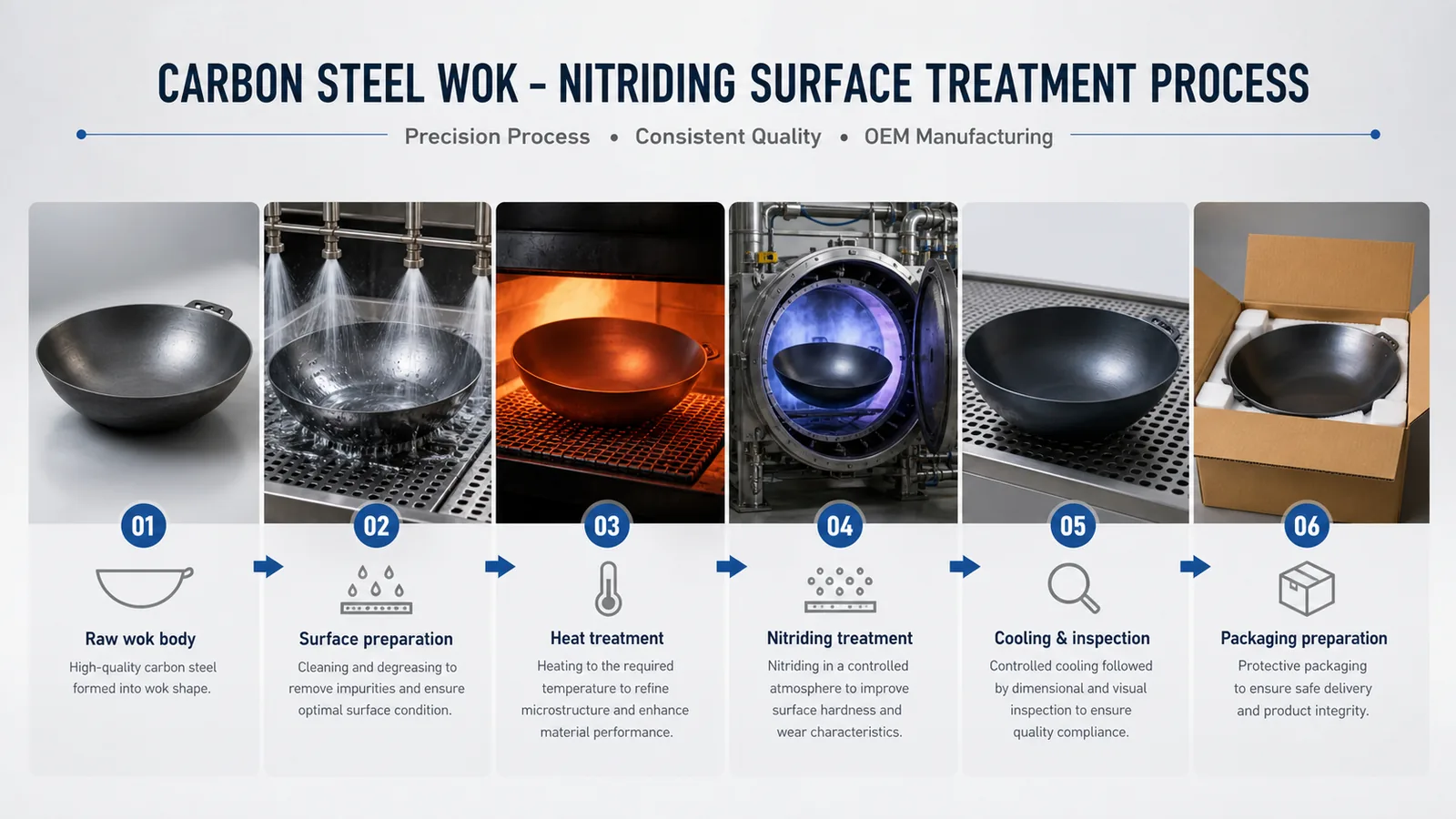
Process Route
For OEM buyers, surface treatment is not only a production step. It affects care cards, packaging copy, inspection language, and after-sales expectations.
Start with carbon steel or iron wok bodies before surface treatment.
Clean and prepare the surface so treatment expectations are realistic.
Use nitriding as the surface treatment route, not as a PTFE or ceramic coating claim.
Review color, surface consistency, rust spots, handle fixing, and buyer care notes.
Buyer Language
Use nitriding as a practical surface-treatment explanation for buyers. The wording should help sourcing, care instructions, and QC review without making risky coating-style promises.
Surface hardness expectations, early rust-resistance positioning, and a darker treated appearance.
Do not present nitriding as a nonstick coating, maintenance-free surface, or never-rust promise.
Clear washing, drying, oiling, storage, packaging, and inspection instructions before shipment.
Buyer Questions
A nitrided wok is usually made from carbon steel or iron and treated through a nitriding surface process. For buyers, the key point is that nitriding is a surface treatment route, not a PTFE or ceramic nonstick coating.
Yes. For many OEM nitrided wok projects, carbon steel is the base material. Nitriding is applied as a surface treatment that affects surface appearance, early rust-resistance expectations, care instructions, inspection points, and packaging requirements.
Yes. Nitriding can support surface hardness and better early rust-resistance expectations, but buyers should still prepare clear washing, drying, oiling, and storage instructions for end users.