Surface positioning
Clarify whether the product is pre-seasoned, nitrided, or using another treatment route.
Comparison
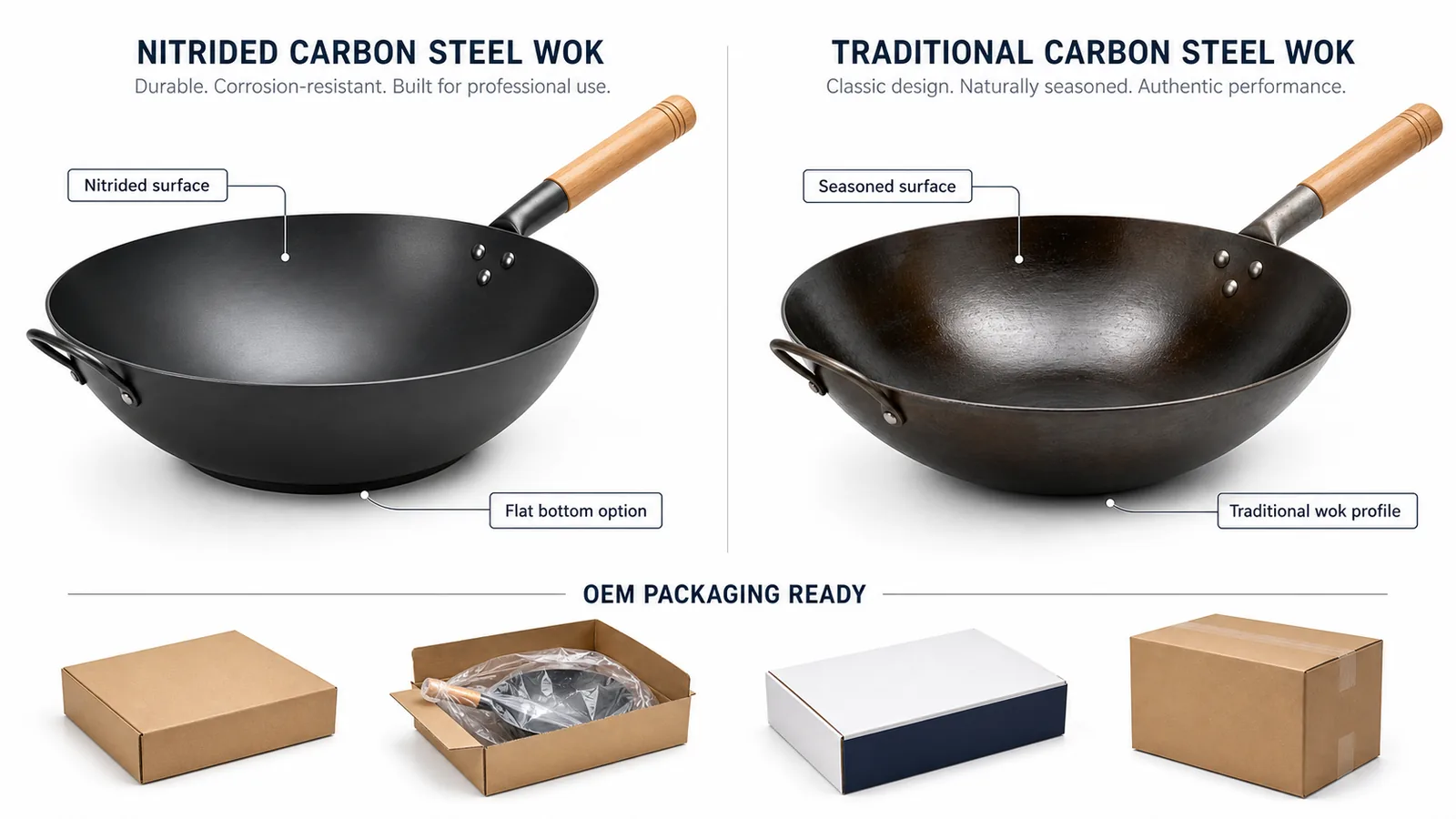
Compare pre-seasoned and nitrided wok routes from an OEM buyer perspective, including surface positioning, care notes, claims, and packaging.
This comparison page helps buyers clarify whether they are discussing seasoning, nitriding, or another surface route before building product claims and care instructions.
Buyer Decision
Use the notes below as a factory-facing checklist before quote, sample approval, bulk production, and export shipment.
Clarify whether the product is pre-seasoned, nitrided, or using another treatment route.
Prepare care notes that match the selected surface route and avoid overclaiming.
Review packaging language before artwork, sample approval, and shipment inspection.
RFQ Checklist
A short but specific brief helps the factory reply with realistic product options, packaging suggestions, sample timing, and inspection planning.
Buyer Questions
No. Buyers should treat them as different surface routes and confirm wording before sampling.
Carbon steel can be a base material, but the surface route and care claims should be clear.
It affects sample approval, packaging copy, care instructions, and buyer expectations.