Surface
Surface color, texture consistency, rust spots, scratches, and visible treatment defects.
Quality Control
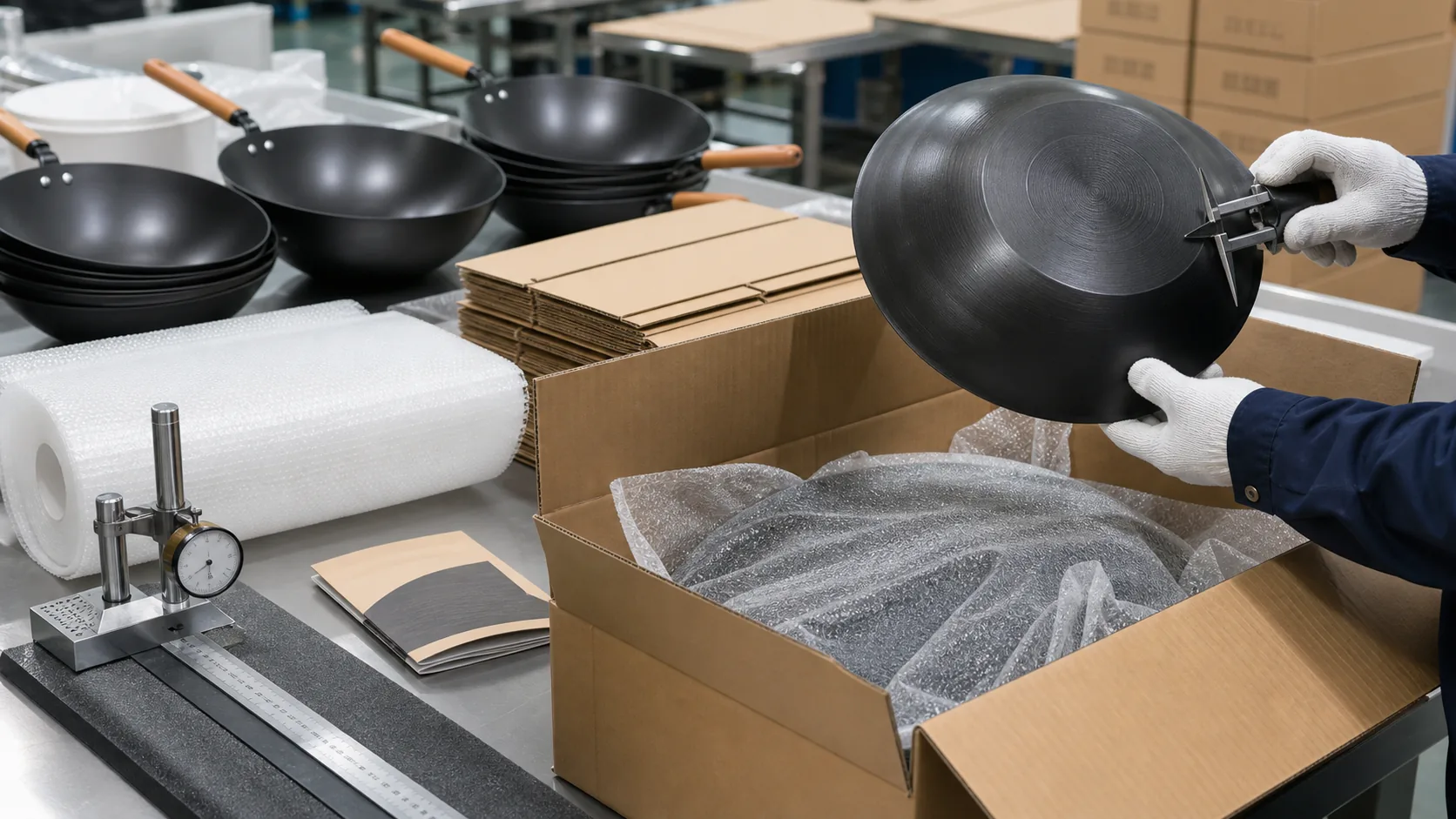
Review the practical checks that matter before export: surface consistency, rust spots, bottom flatness, handle fixing, lid fit, packaging protection, and care instruction accuracy.
Inspection Scope
Instead of treating quality control as generic inspection, this page groups checks by the decisions that affect buyer satisfaction after delivery.
Surface color, texture consistency, rust spots, scratches, and visible treatment defects.
Bottom flatness, wok balance, handle fixing, rivet area, lid fit, and edge finishing.
Inner protection, care card, retail box, carton mark, barcode label, and export carton strength.
Care instruction accuracy, surface treatment wording, and claim boundaries before shipment.
Inspection Flow
Use approved sample and care note as the reference before production starts.
Review surface, handle fixing, bottom shape, and packaging materials during production.
Confirm packed goods against order spec, carton mark, quantity, and visible defects.
Buyer Questions
A nitrided wok is usually made from carbon steel or iron and treated through a nitriding surface process. For buyers, the key point is that nitriding is a surface treatment route, not a PTFE or ceramic nonstick coating.
Yes. For many OEM nitrided wok projects, carbon steel is the base material. Nitriding is applied as a surface treatment that affects surface appearance, early rust-resistance expectations, care instructions, inspection points, and packaging requirements.
Yes. Nitriding can support surface hardness and better early rust-resistance expectations, but buyers should still prepare clear washing, drying, oiling, and storage instructions for end users.